


- Jenny Flores
DeCLARA60 bids farewell to 2025 with the milestones that defined the region's digital year
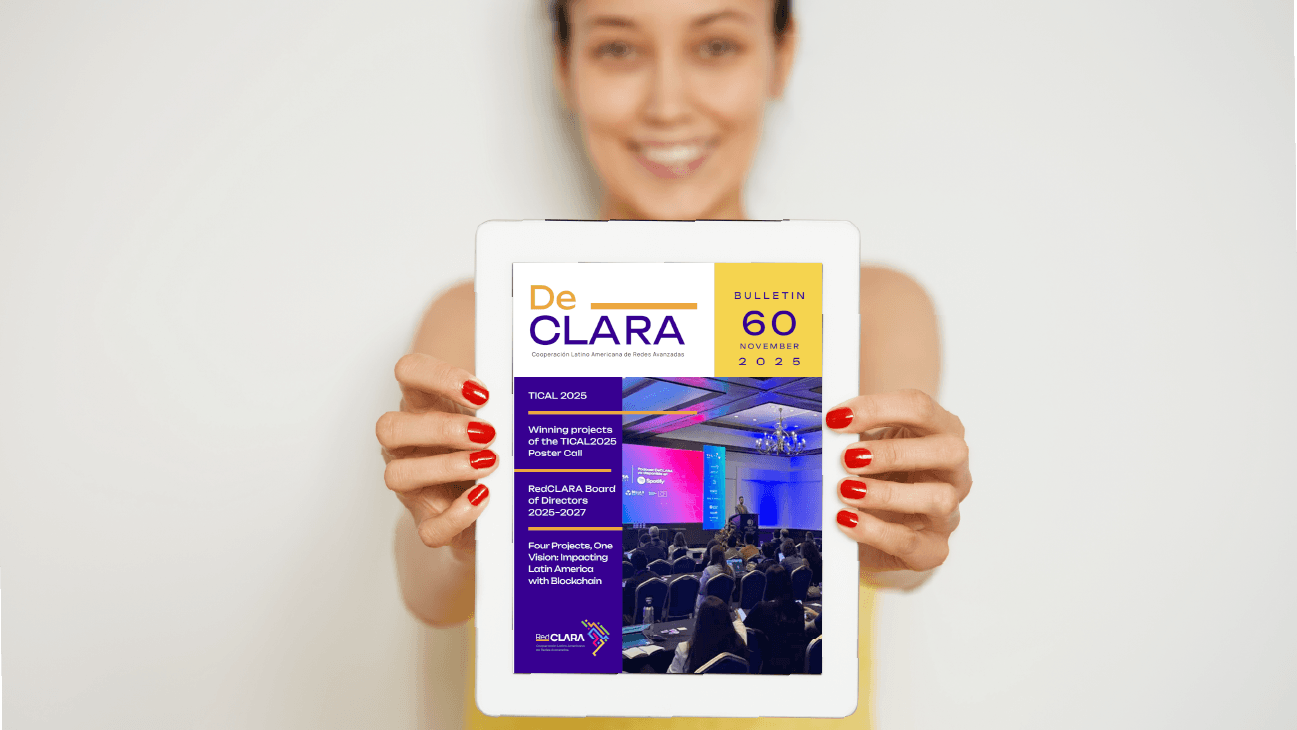 The 60th edition of RedCLARA’s digital newsletter presents the main activities of the final months of the year and shows how the regional ecosystem continued to strengthen through collaborative projects, new partnerships, and actions aimed at supporting scientific and academic communities. This edition highlights advances in cooperation, infrastructure, and capacity building within Latin America’s national research and education networks.
The period was marked by TICAL2025, held in San José, Costa Rica, with over 200 attendees. The event offered valuable insights and new perspectives on regional challenges in artificial intelligence, digital transformation, open science, digital security, and more.
Prior to the event, the workshop “Connecting Minds, Transforming Realities” brought together the regional community around open innovation, advanced connectivity, and co-creation.
At TICAL2025, key agreements were also signed: one with ENRICH in LAC to promote innovation and bi-regional cooperation, and another with Brazilian company Calriz, aimed at strengthening regional connectivity and supporting digital transformation processes in Latin America.
Meanwhile, the BELLA II program continued consolidating as a pillar of digital cooperation between Latin America and Europe. The signing of a Memorandum of Understanding (MoU) with Costa Rica opened new opportunities to enhance connectivity and develop joint projects. Additionally, BELLA II expanded its reach with new testbeds in blockchain, bioinformatics, and artificial intelligence and launched initiatives enabling institutions in the region to explore and utilize these technologies. Among them, the Early Adopters LATAM program stood out, bringing together various initiatives and creating spaces to test solutions, validate pilots, train teams, and develop success stories. The strategic value of BELLA II was also recognized in international forums, including the IV CELAC–EU Summit.
RedCLARA fortified its internal structure by appointing a new board of directors to steer the institutional agenda for 2025–2027. This was complemented by new outreach and training initiatives, such as the launch of the DeCLARA podcast and a webinar series on quantum technologies applied to health, bringing together specialists from different countries.
The year-end edition also includes details about Ciberpuentes, an initiative that reinforced cybersecurity capacities in the region through four events held between October and December. In addition, the CARLA 2025 conference offered a week dedicated to collaboration and development in high-performance computing, artificial intelligence, and data management.
With these achievements, RedCLARA concludes a year of intense work, strategic partnerships, and service expansion, looking ahead to 2026 with renewed momentum to continue strengthening science, education, and innovation in Latin America.
