


RNP strengthens international cooperation for the structuring and development of AngoREN
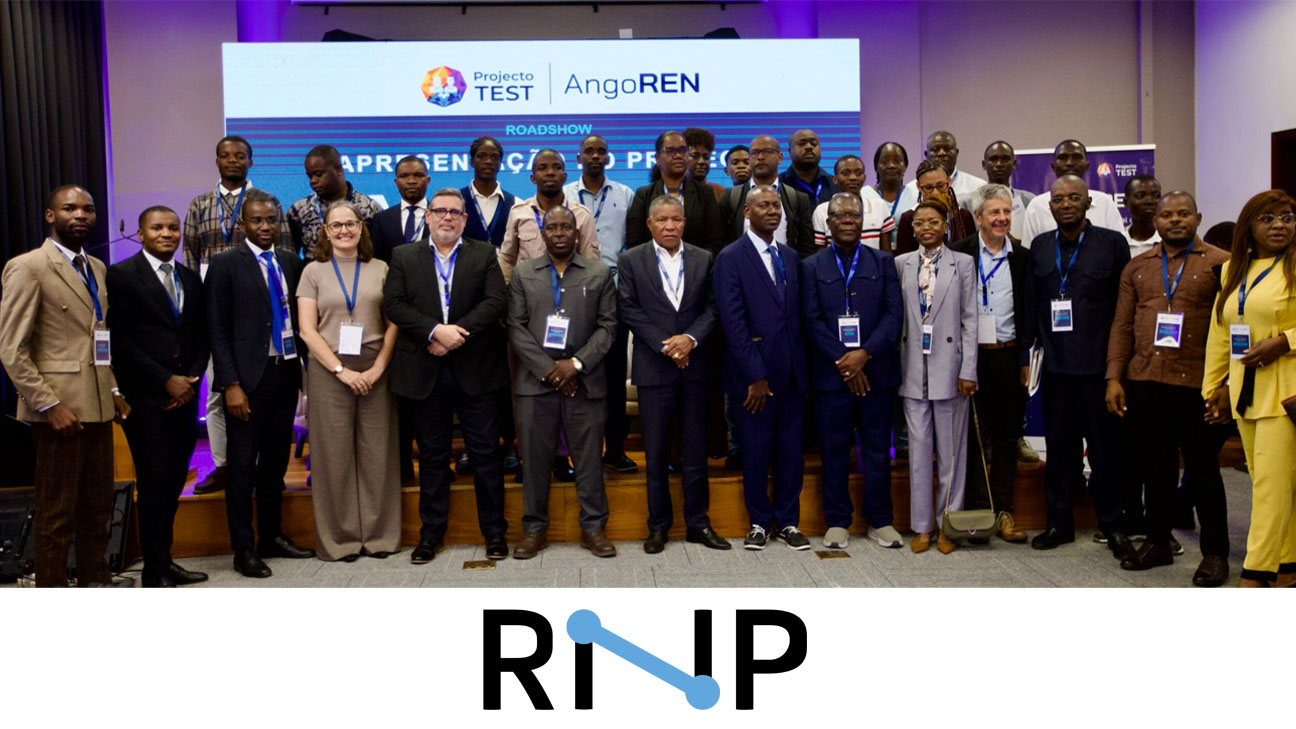
RNP participated in the AngoREN National Roadshow 2026, the National Education and Research Network of Angola, on May 11th in Luanda and May 13th in Benguela, at the invitation of the Angolan Ministry of Higher Education, Science, Technology and Innovation (MESCTI), within the scope of the Higher Education, Science and Technology Development Project (TEST). The event brought together representatives from the government, higher education institutions, research centers and strategic partners, including telecommunications companies, to present AngoREN and the Executive Roadmap for the Digital Transformation of Higher Education.
(Source: RNP) The TEST Project The TEST Project is an initiative of the Angolan Government that aims to improve the quality of students entering higher education, update programs in strategic areas, and strengthen the management of the sector, including AngoREN
itself. With funding of $200 million from the World Bank and a direct impact on more than 185,000 beneficiaries by 2028, the project operates throughout the national territory, with initial interventions in the provinces of Bengo, Huambo, Huíla, and Uíge.
The meeting marked a decisive moment for the transformation of higher education in Angola, promoting strategic alignment, institutional mobilization, and concrete preparation of institutions for a new reality—more digital, more connected, and more integrated.
At the heart of this process is AngoREN, a national infrastructure for education and research that will enable:
- Connecting higher education institutions and research centers;
- strengthen academic connectivity and offer other related services;
- to broaden access to knowledge and innovation;
- to integrate Angola into international education and research networks.
In a complementary manner, the Digital Transformation Roadmap for Higher Education, within the context of the TEST Project, establishes guidelines for modernizing the sector, addressing technological challenges, and strengthening institutional capacities, creating conditions for higher education to act as an engine for the scientific, technological, and socioeconomic development of the country.
Representing RNP at the event were the Director of Services and Solutions, Antônio Carlos Fernandes Nunes, the Director of Engineering and Operations, Eduardo Grizendi, and the Governance and Management Manager, Pilar de Almeida. They shared the Brazilian experience in structuring and operating a national education and research network, addressing topics such as modeling, structuring and offering services, programs and projects with an impact on public policies, training, governance, open innovation, infrastructure, and institutional relations.
RNP as a platform for the development of teaching and research
In his presentation, Antônio highlighted RNP as a strategic platform for the technological development of education and research in Brazil, emphasizing its role as a national, non-profit academic network focused on generating public value.
Data was presented on the organization's reach, connecting thousands of institutions, campuses, researchers, and students through a robust fiber optic infrastructure and advanced digital services. The presentation also addressed the historical evolution of the network, from the introduction of the internet in Brazil to its current role in digital transformation, collaborative innovation, and support for public policies in science, technology, and education.
The presentation highlighted RNP's experience in research, development and innovation (R&D&I) programs, in offering specialized digital services and in building collaborative ecosystems, elements considered relevant to inspire and support the consolidation of AngoREN.
“RNP’s participation reinforces the strategic role of Brazil-Angola cooperation in strengthening the digital, scientific, and educational capabilities of both countries. By sharing its trajectory as a national academic network responsible for supporting the digital transformation of teaching and research in Brazil, RNP presents a consolidated model of action based on advanced infrastructure, digital services, innovation programs, and the articulation of collaborative ecosystems focused on generating public value and supporting public policies. Contributing to the consolidation of AngoREN means supporting the construction of an academic network capable of boosting teaching and research in Angola, based on the sharing of experiences in institutional modeling, structuring of services, development of impactful programs, and skills training. This rapprochement strengthens South-South cooperation and reaffirms RNP’s commitment to international cooperation in the development of collaborative digital environments for education, science, and innovation,” highlighted Antônio Carlos Fernandes Nunes.
The importance of partnerships in deploying robust optical infrastructures
Grizendi's presentation addressed RNP's strategy for deploying and sustaining its optical infrastructure – backbone and metropolitan networks – through partnerships with providers and operators, highlighting the construction of state and regional information highways in the country, always in partnership and sharing infrastructure with market operators and ISPs.
In the context of academic networks, the Director of Engineering and Operations presented RNP from the perspective of open innovation, capable of connecting universities, research centers, companies, startups, and government. He also highlighted how the organization's infrastructure—including fiber optics, data centers, and experimentation environments—can support applied research projects, technological development, and new business models, contributing to the strengthening of national innovation systems.
“A robust infrastructure for an academic network must be continuously pursued to ensure it is always available to researchers and educators, not only for their daily use, but also and especially to meet their ICT demands for scientific and technological research, and educational activities in higher education. And this needs to be done boldly, but always with concern for its sustainability,” emphasized the Director of Engineering and Operations.
Governance, relationships, and institutional model of RNP
In the presentation led by Pilar de Almeida, the focus was on governance and the institutional relationship model of RNP. Pilar presented the RNP System as a collaborative community formed by educational, research, and innovation institutions, guided by principles such as neutrality, transparency, cost sharing, and technical excellence.
The organization's governance structure, its councils and committees, as well as the mechanisms for interaction with the academic community, government agencies, and strategic partners were detailed. She also emphasized the importance of networking, institutional cooperation, and strategic alignment to ensure sustainability, legitimacy, and long-term impact—aspects considered fundamental to the structuring of AngoREN.
“Sharing ideas about governance, opportunities, and challenges of sustainability for academic networks, in their different contexts and characteristics, is a very enriching experience! Furthermore, I noticed a strong alignment between the ministry team and the academic community with the AngoREN initiative. I have high expectations for the continuation of our cooperation,” stated Pilar.
Participation in AngoREN's National Roadshow 2026 reinforces RNP's commitment to international cooperation, the exchange of experiences, and the strengthening of academic networks as strategic instruments for the digital transformation of education, science, and the promotion of innovation around the world.

Rambla República de México 6125.
Montevideo 11400. Uruguay.
Montevideo 11400. Uruguay.